The opinions expressed in this essay are the author’s own.
by Andrea Stultiens
|
The notion of truth is not something that often comes to mind when working with the legacy of Paul Julien (NL, 1901-2001). More present are a sense of unease with the combination of a conservative white supremacist gaze in a colonial context, admiration for photographic skill, and an interest in the affordances the photographs Julien produced have when activated beyond his authorship. To find out more about this activation of this collection, currently in the care of the Nederlands Fotomuseum in Rotterdam, please visit the project website devoted to it.
Julien was a public figure in the Netherlands during much of the 20th century thanks to the stories he told about his experiences traveling through ‘Equatorial Africa’ during the period 1932-1962. Over the decades Julien maintained that the primary purpose for his journeys was scientific data collection, but his fame and, to some extent, fortune came from the stories conceived for general audiences. These stories reached the masses through highly popular radio lectures and books, interviews in printed news media and on national television, and illustrated lectures for clubs and associations all over the Netherlands. In the August 1962 issue of bi-weekly photography magazine Focus, Julien is portrayed as “an excellent photographer. […] His objective always and above all else: documentary. He doesn’t hunt for effects; he registers and documents.” The article ends with a paragraph not speaking about Julien, but directly addressing him: “Dr. Julien, […] we wish for the many Africans you will meet once again on your next journey to notice how the soul of the true Westerner is full of attention and warm affection for their fellow human beings in Africa.”[1] I cringe with the latter quote and disagree with the former. Nevertheless, they are as true as things get in terms of the context in which the photographs produced by Julien were published. That is, their historical context should be taken as a truth. And we, in the present, should come to terms with and learn from how this context, and with it the photographs embedded in it, presents non-truths. |
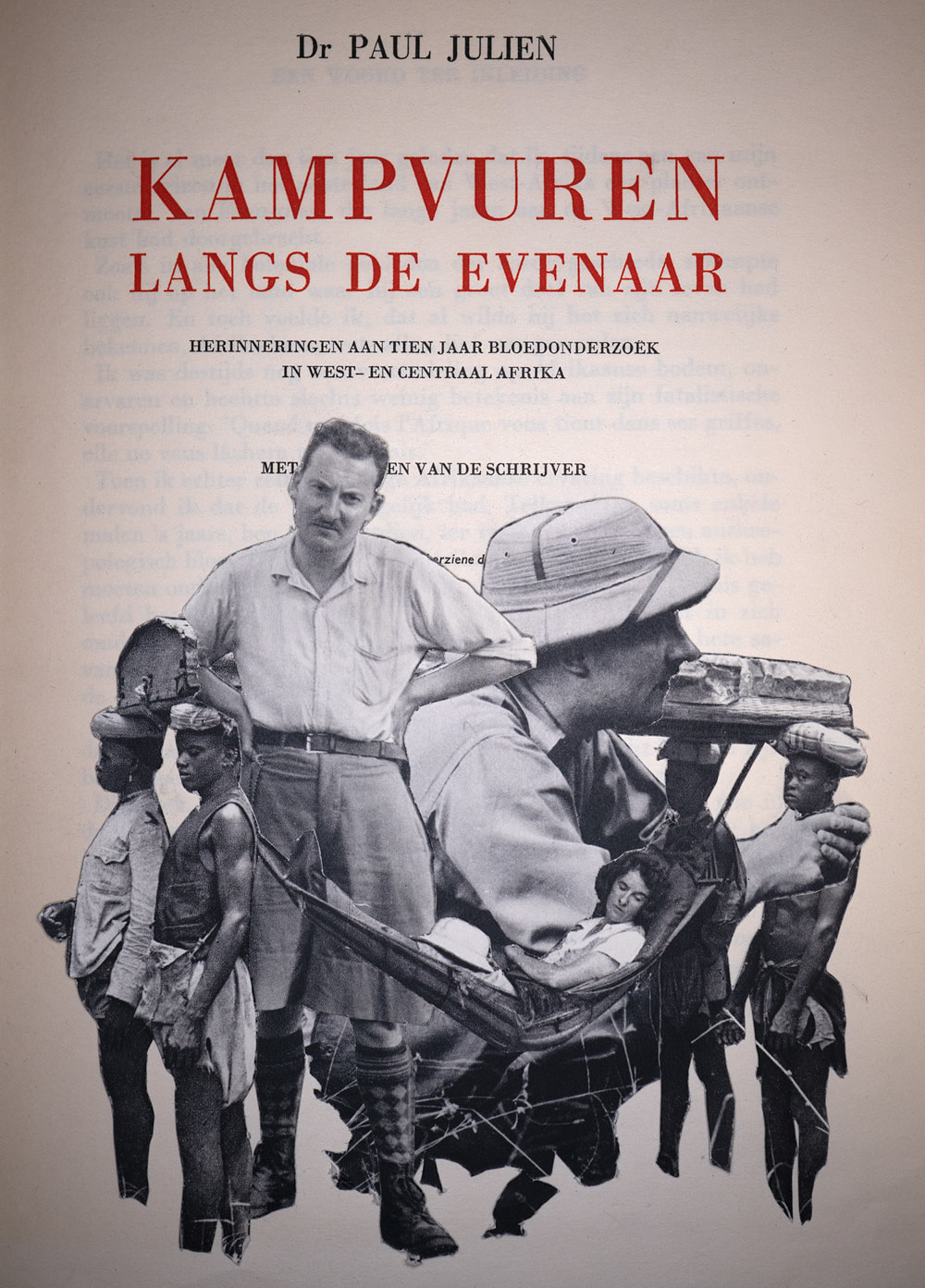
Collage of all appearances of ‘Dr Paul Julien’ and his wife in the 1940s & 1950s editions of his books. Paul Julien, various publishers, dates of first editions: 1940, Kampvuren Langs de Evenaar [Campfires Along the Equator], 1949, Eeuwige Wildernis [Eternal Wilderness], 1953, Pymgeeën [Pygmies], 1959, Zonen van Cham [Sons of Cham]. The first three titles were translated in several European languages, but never in English.
|
To make my case I present here a selection of photographs with captions providing contextual information collected from various documents and published versions of photographs as well as encounters that were initiated as part of the research project. These encounters took place on social media, on the African continent with people who have an interest in the photographs because of the historical truth of what the pictures show, rather than the audience intimately connected to and implicated in this other historical truth. The truth of how the picture was presented. While I am initiating the encounters with the photographs for the first audience, I, as a white Dutch woman growing up in the last quarter of the 20th century, am part of the second. Over the years of working with the photographs produced by Julien, I grew more and more aware of the truth that my image of ‘Africa’ was shaped by the truth mediated by Julien and the likes.
[1] My translation. Dick Boer, “Dr. Paul Julien, a grand human being, a grand photographer,” in Focus No.18, August 31st, 1962.
[1] My translation. Dick Boer, “Dr. Paul Julien, a grand human being, a grand photographer,” in Focus No.18, August 31st, 1962.
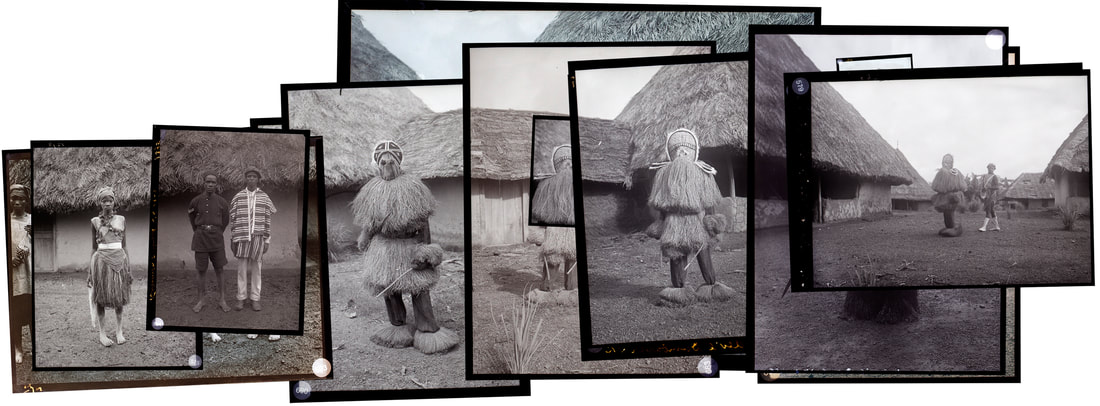
The truth is that on August 8th or 9th, 1934 a range of masks and dancers performed in Dambarra, Sierra Leone, on the occasion of the visit of a white man who stayed at the catholic mission just out of town.
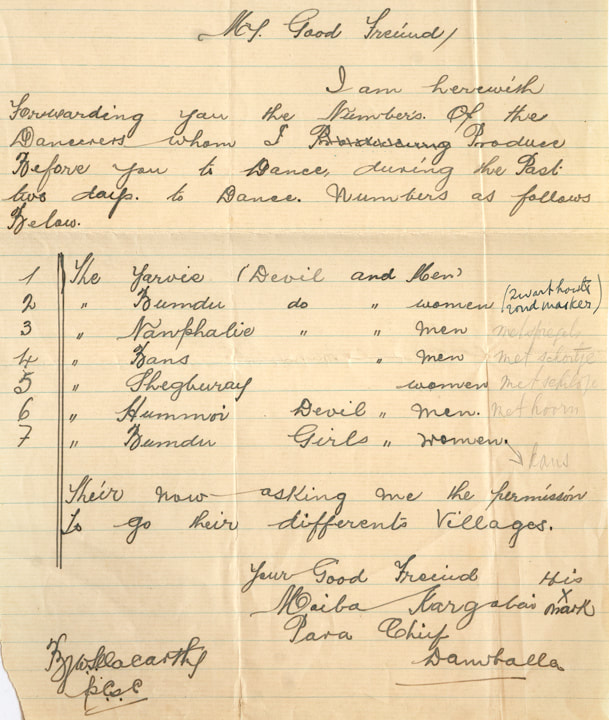
The truth is that on August 9th the secretary of Paramount Chief Kargobai composed a list with the names of the masks and dancers and asked for permission for the performers to return to their villages.
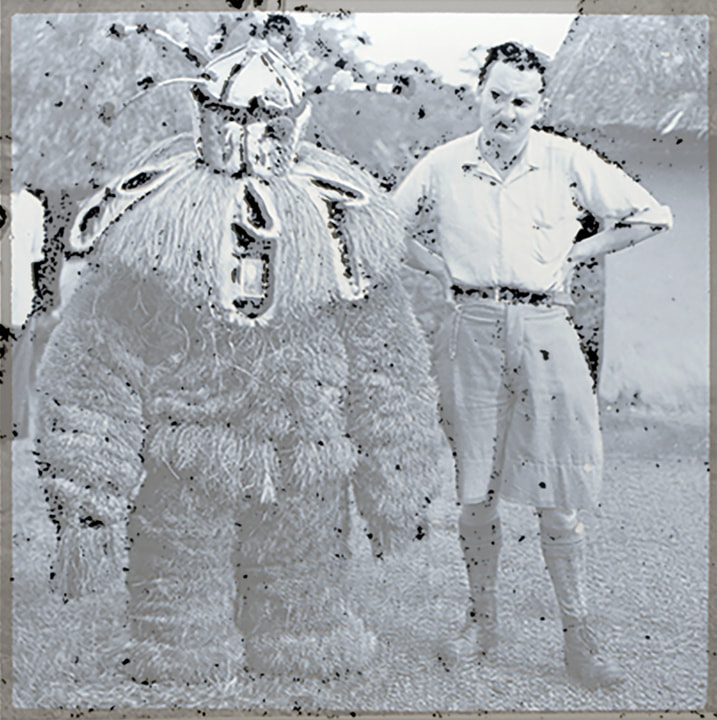
The truth is that a photograph of the white man alongside ‘Yarvie’ started to circulate from the mid 1930s onward with the wrong name in the caption. This picture is a blend of the lanternslide of the photograph and an online available version from a 1942 Dutch newspaper article. It’s headline translates into “The memoires of a blood hunter,” referring to the data collection that included the analysis of blood samples that were in many if not most cases not provided voluntarily but under pressure of those in power.
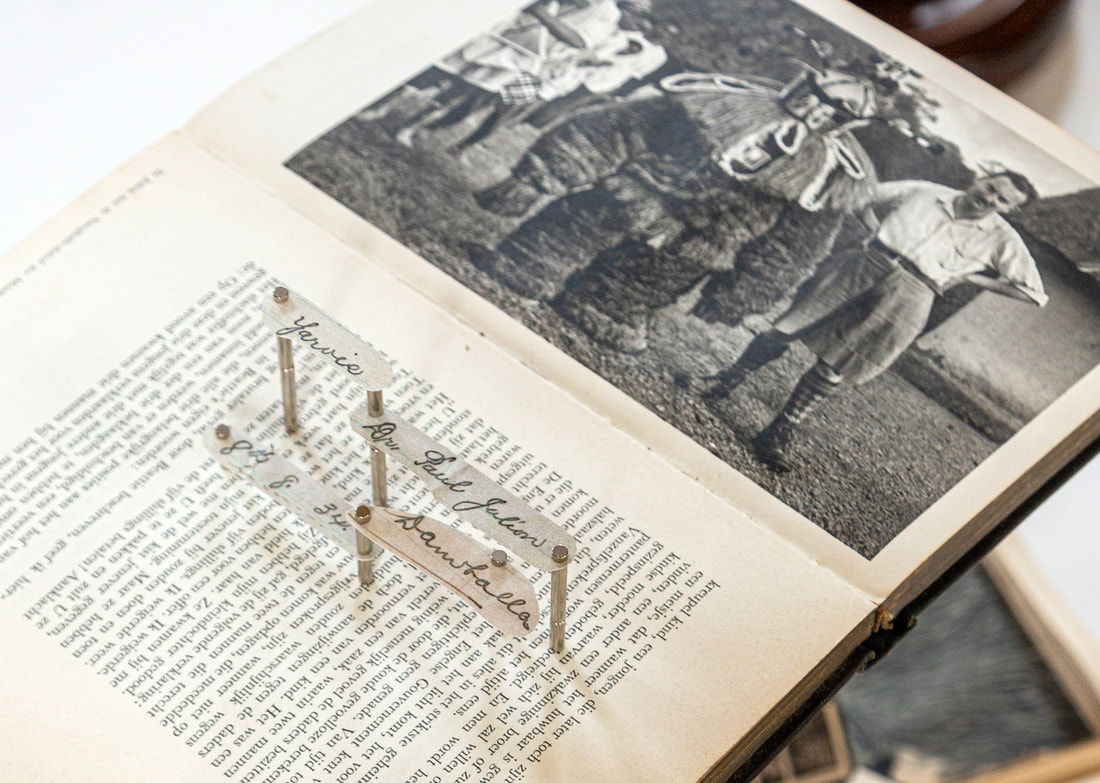
The truth is that the same photograph, with the same mix-up in the caption, was published in all editions of the white man's first book. Eventually, throughout the 1940s and 1950s, more than 100,000 copies of the book were sold in the Netherlands alone.
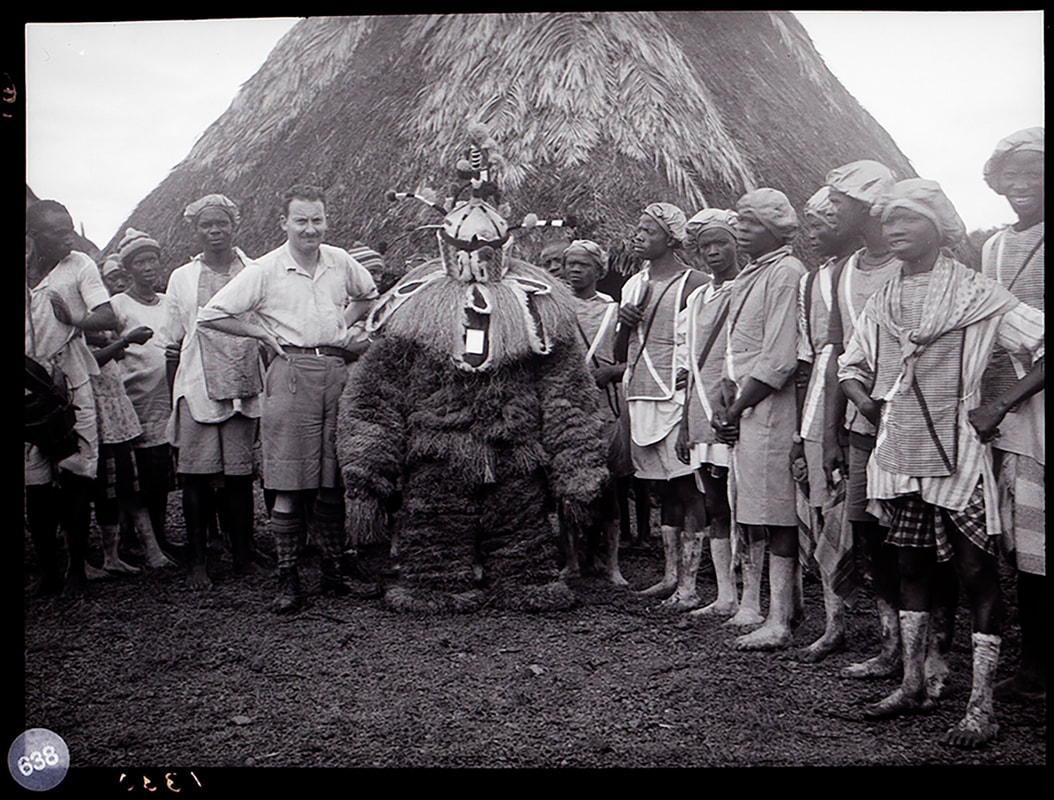
The truth is that in the photographic legacy of the white man, currently in the care of the Nederlands Fotomuseum, the negative of the published photograph with the mask is missing. There is another one, though, with the white man positioned on the other side of the mask. It is filed as PJU-2328 with the information “Paul Julien visiting the Mende (Nawfalie) in Sierra Leone, 1934.”
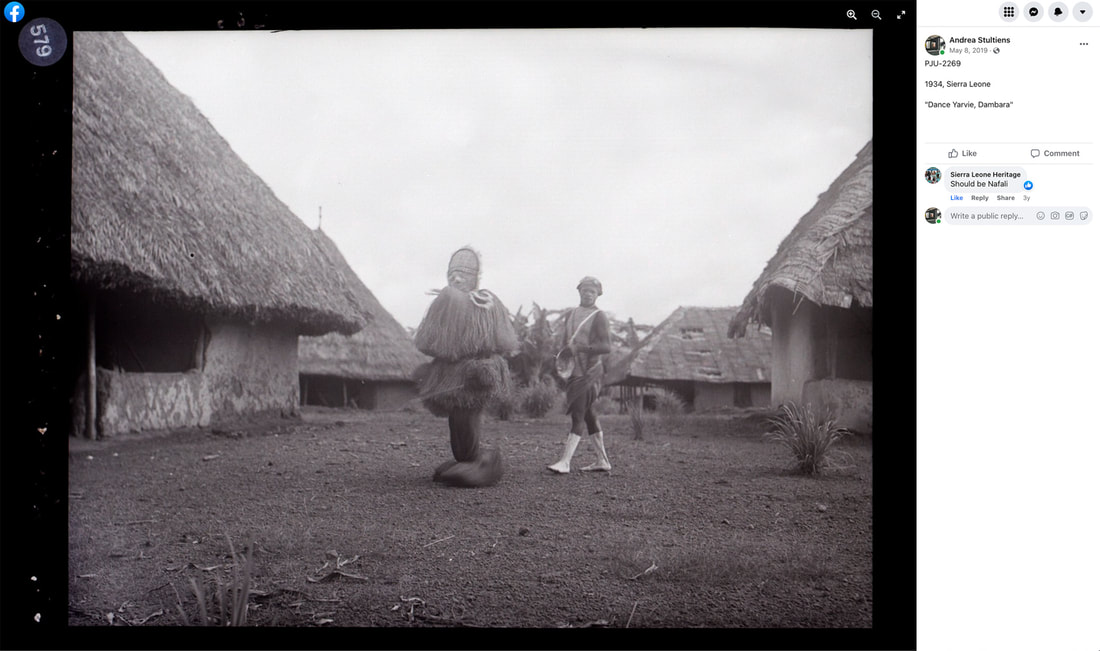
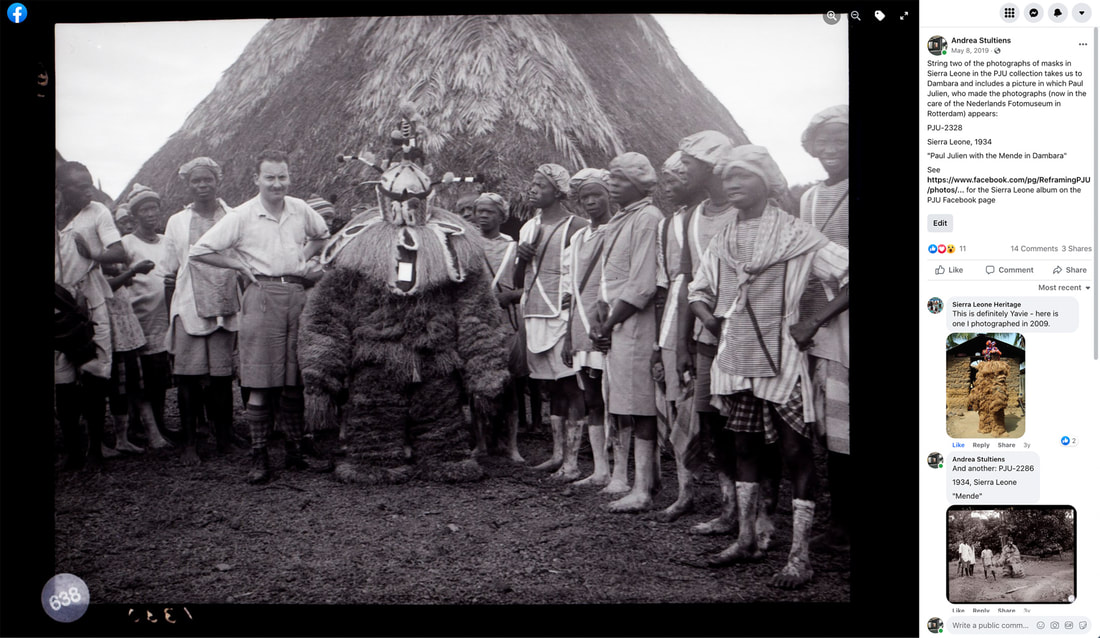
The truth is that the identification of the mask was instantly corrected when I shared the digitised negative in Facebook groups devoted to the history and cultural heritage of Sierra Leone. A Dutch contact subsequently asked to what extent any of the information provided by the white man with the photographs he produced can be taken seriously.
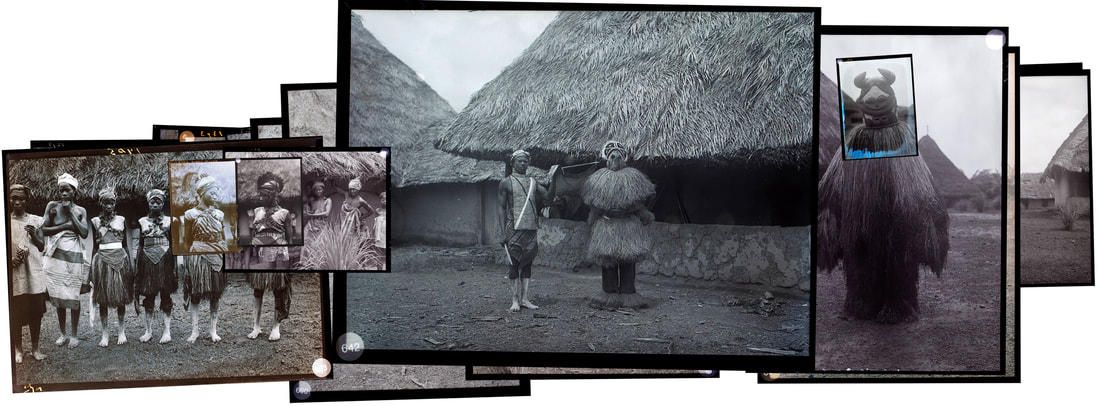
The truth is that I was only able to construct this panoramic overview of part of Dambarra in 1934 after visiting the town in 2020, even though the only structure that was photographed and is still standing is not part of this picture.
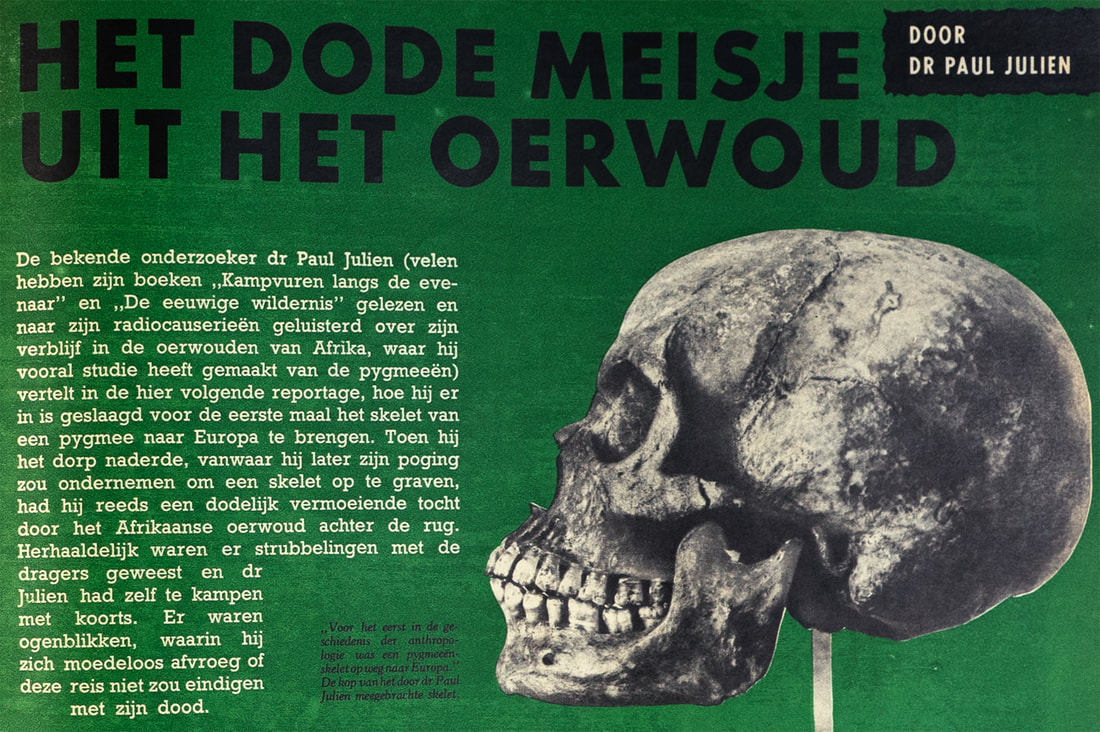
The truth is that a photograph of a skull illustrated a pre publication of Paul Julien's third book Pygmies. The text speaks of a nightly expedition by Julien, helped by a local ‘negro’ [sic!] Chief and a ‘halfblood’ Efe to unearth an ‘Efe pygmy’ skeleton for scientific purposes.
|
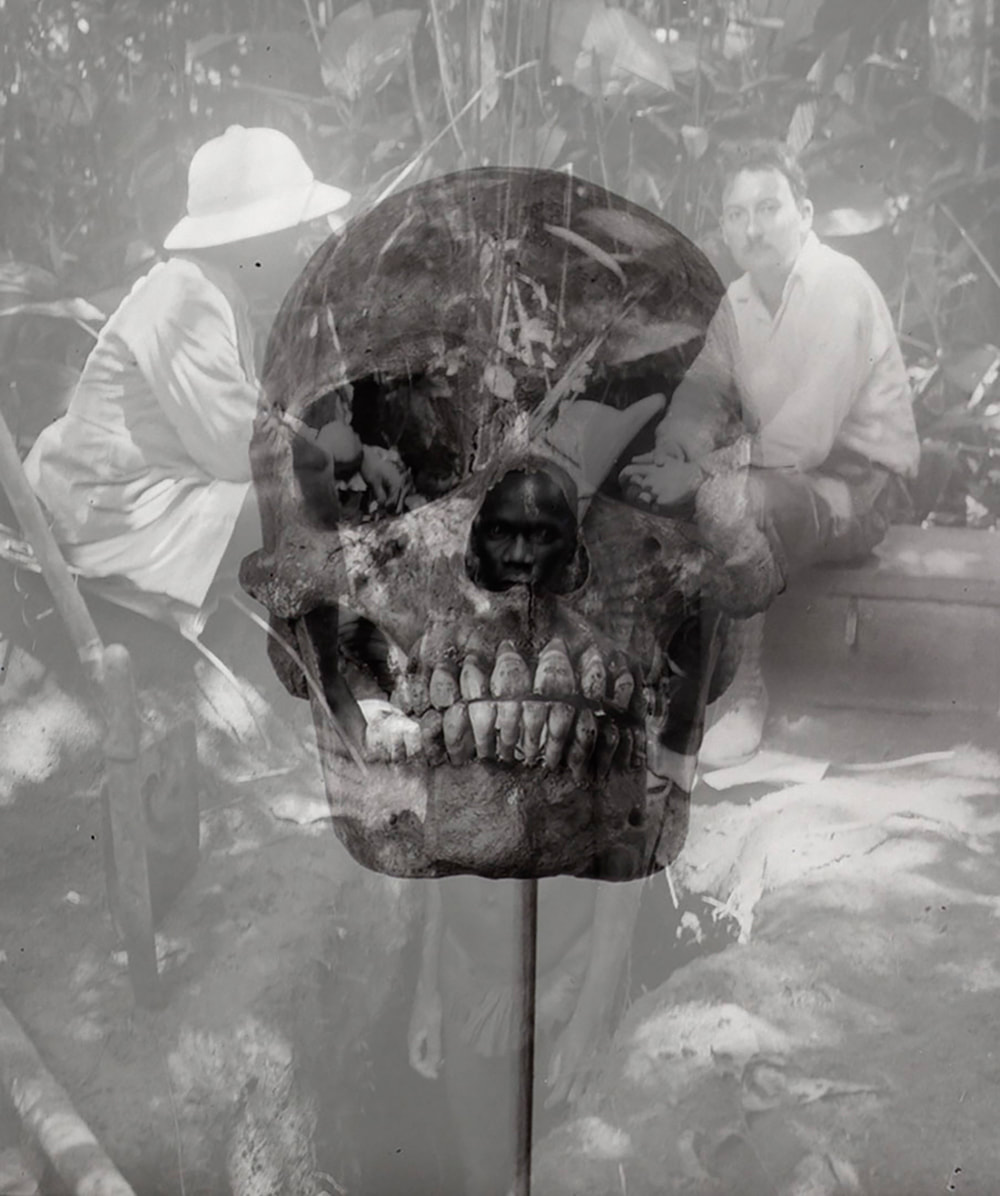
The truth is that negative PJU-2975, “Excavation Efe grave,” was made in broad daylight, that the skeleton is said to have been donated to the museum of Utrecht University, and has gone missing without, for the time being, a trace.
|
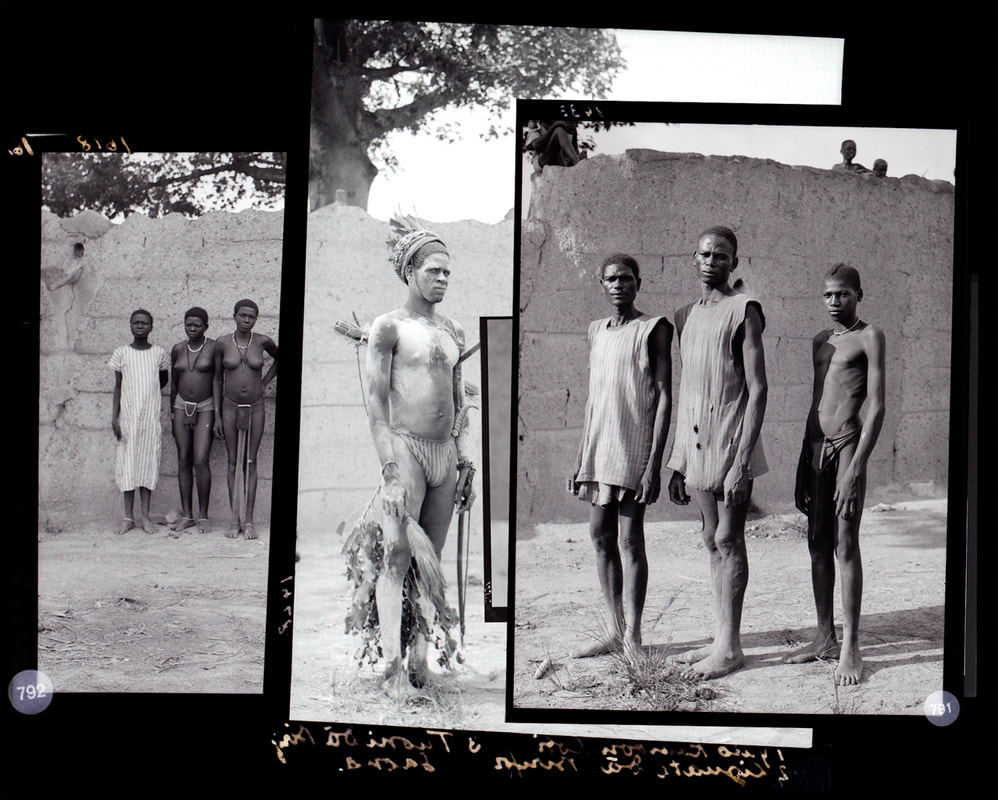
The truth is that in 1935 Paul Julien made several portraits in front of a so-called Soukala in Gouao, in the south of present day Burkina Faso.
|
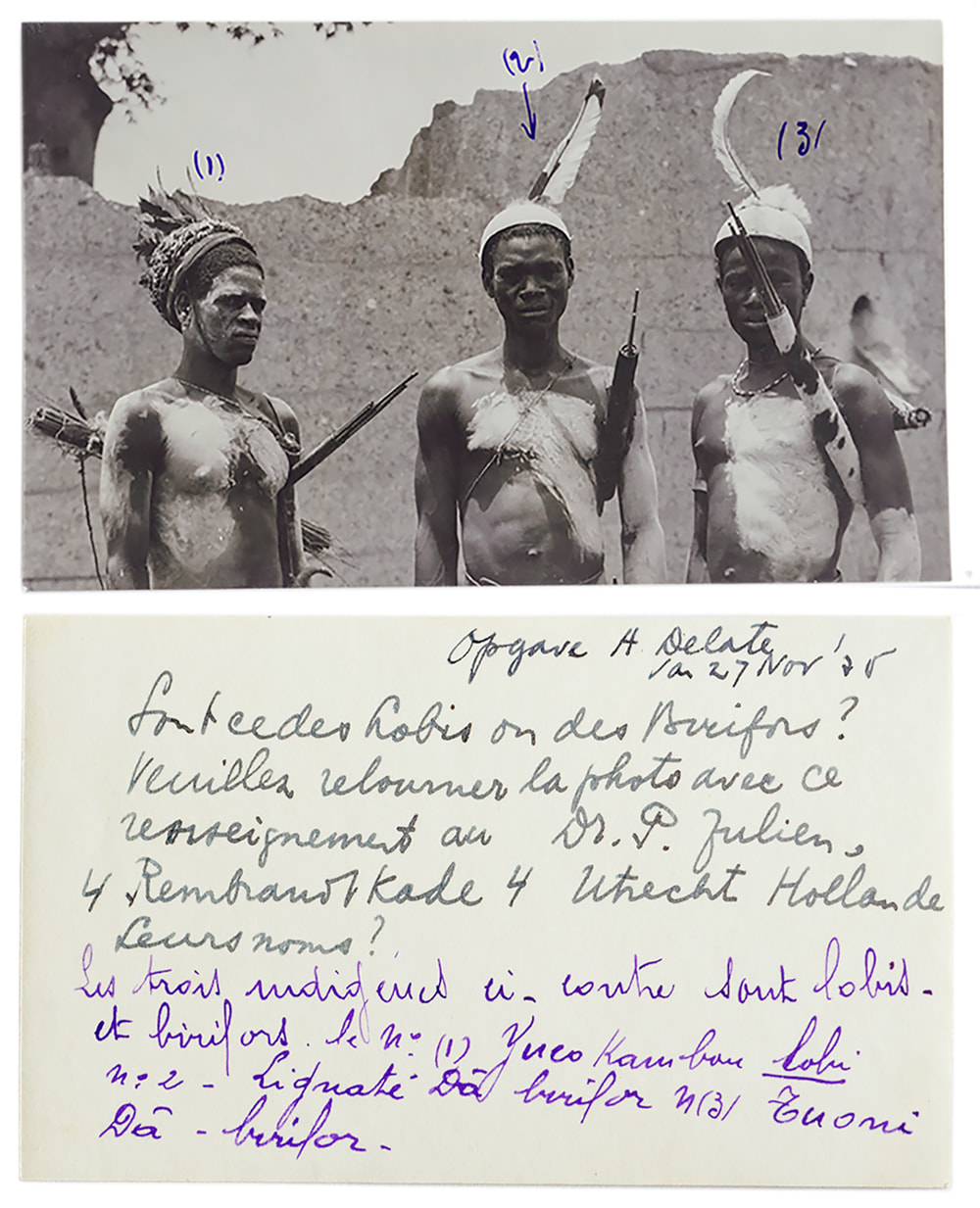
The truth is that there is a print among the documents with the PJU collection that was sent out to France to make inquiries into the ethnicities of three of the men who were part of the event.
|
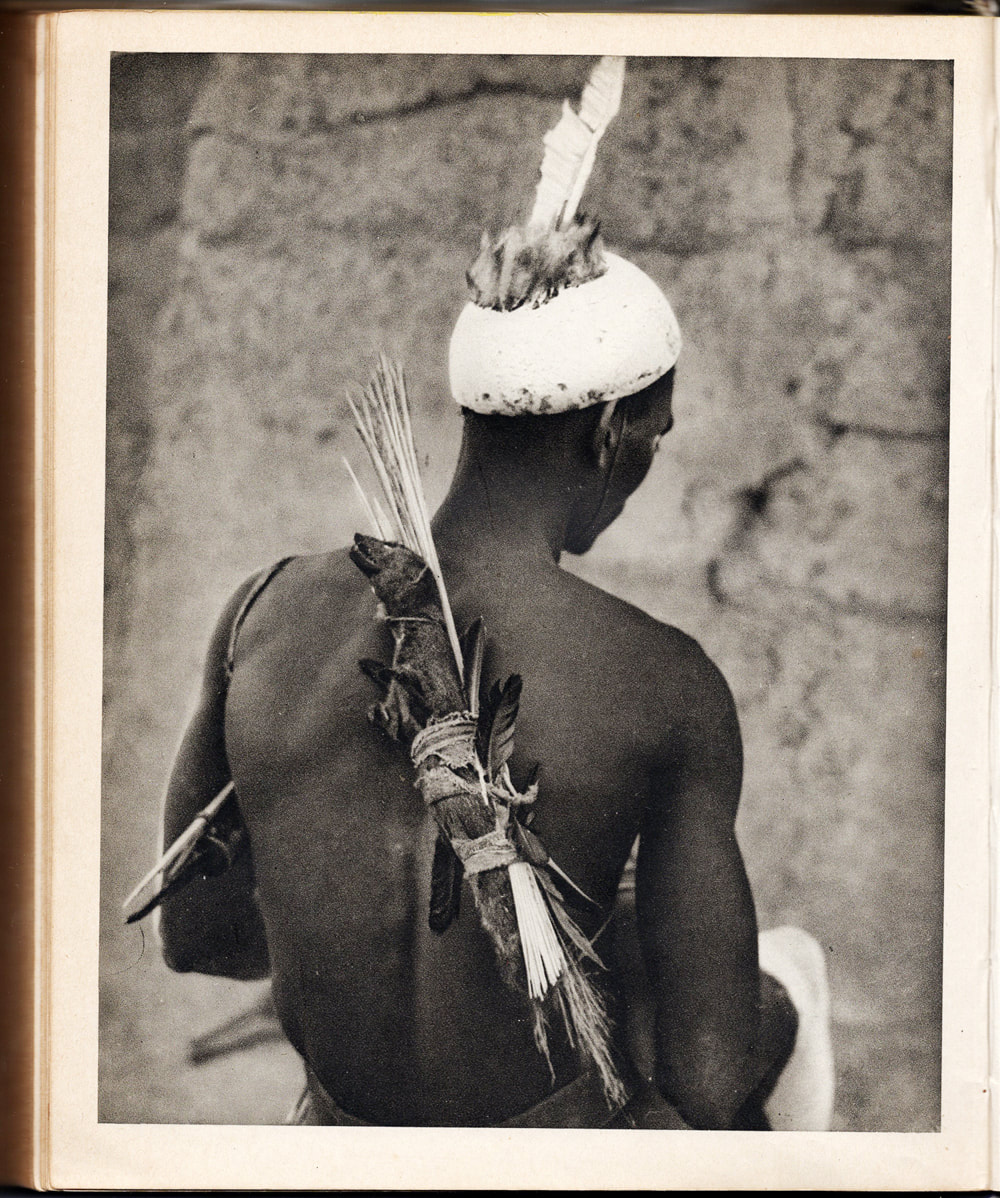
The truth is one of these men also appears in Campfires Along the Equator with the caption “Birifor warrior, Black Volta.”
|
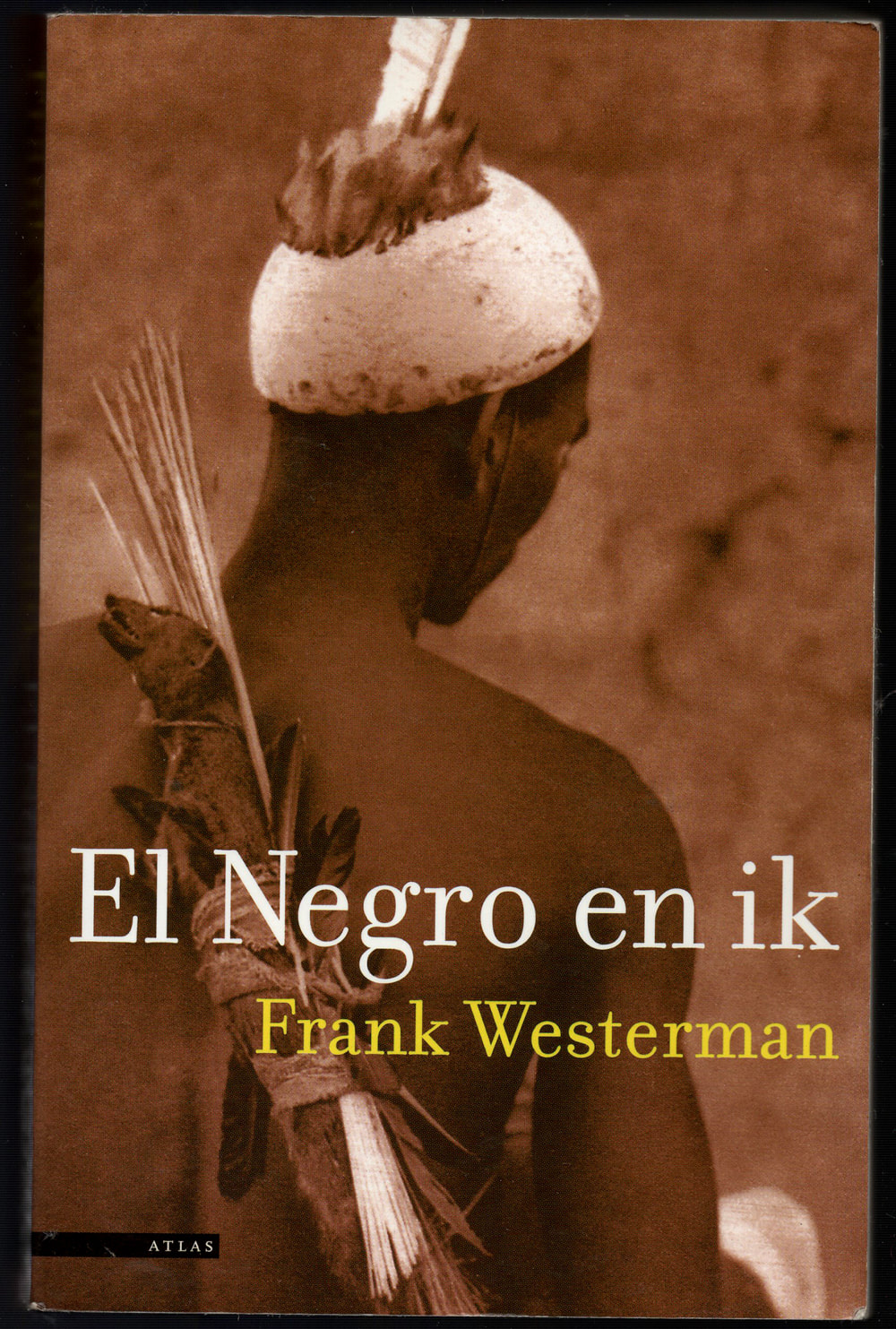
The truth is that the negative of the picture printed in the book is, again, no longer available and that therefore a print must have been used to produce the cover for the first Dutch edition of the book El Negro and me by non-fiction author Frank Westerman (2004). The book narrates the encounter between Westerman and a stuffed black man in a museum in France, and the provenance of his presence in a Spanish Museum. The stuffed man turns out to have come from the far south west of Africa, thousands of kilometers away from where Julien produced the photograph in what was then Upper Volta.
|
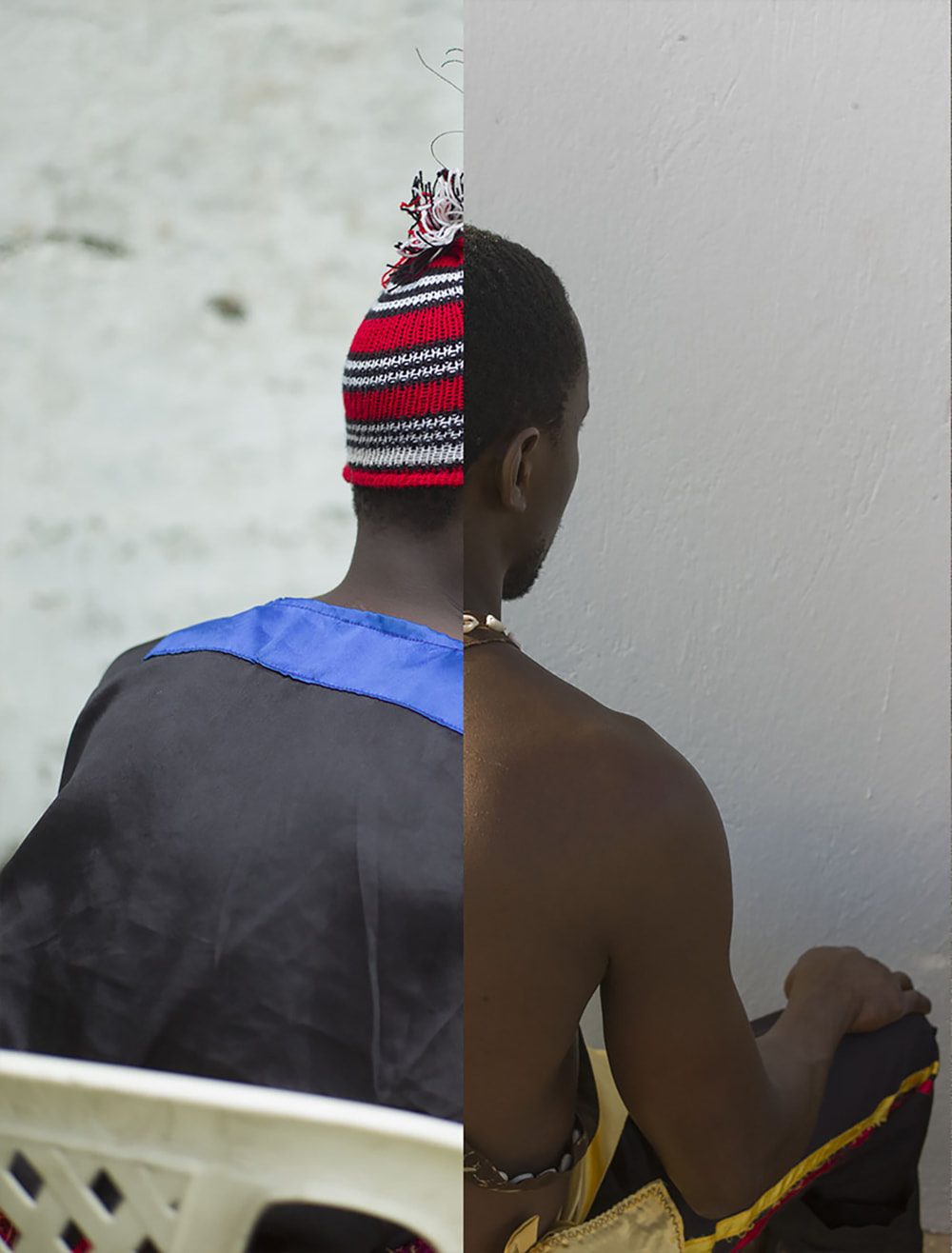
The truth is that dancers in cultural troupes Footsteps of David (Lagos, Nigeria) and Kika (Kajjansi, Uganda) reminded me of the warrior of the photograph, and agreed to be photographed in an attempt to question his appropriation.
|
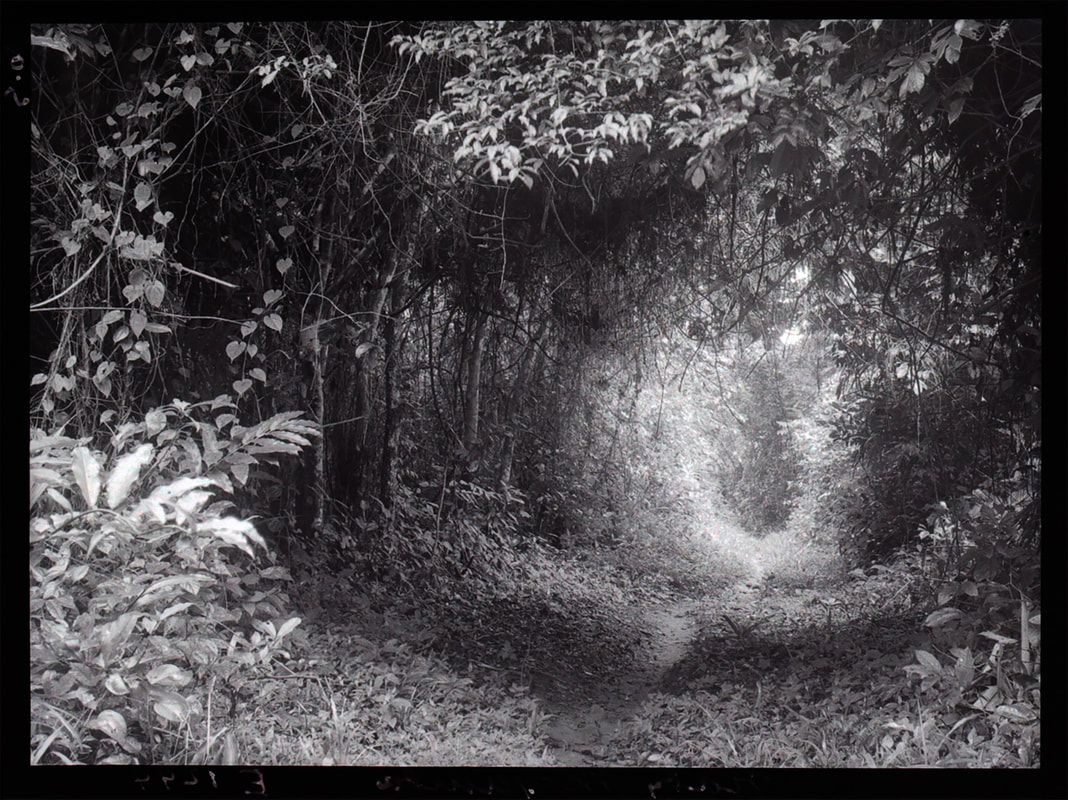
The truth is that Paul Jukien photographed a forest path near Moyamba, Sierra Leone in 1934.
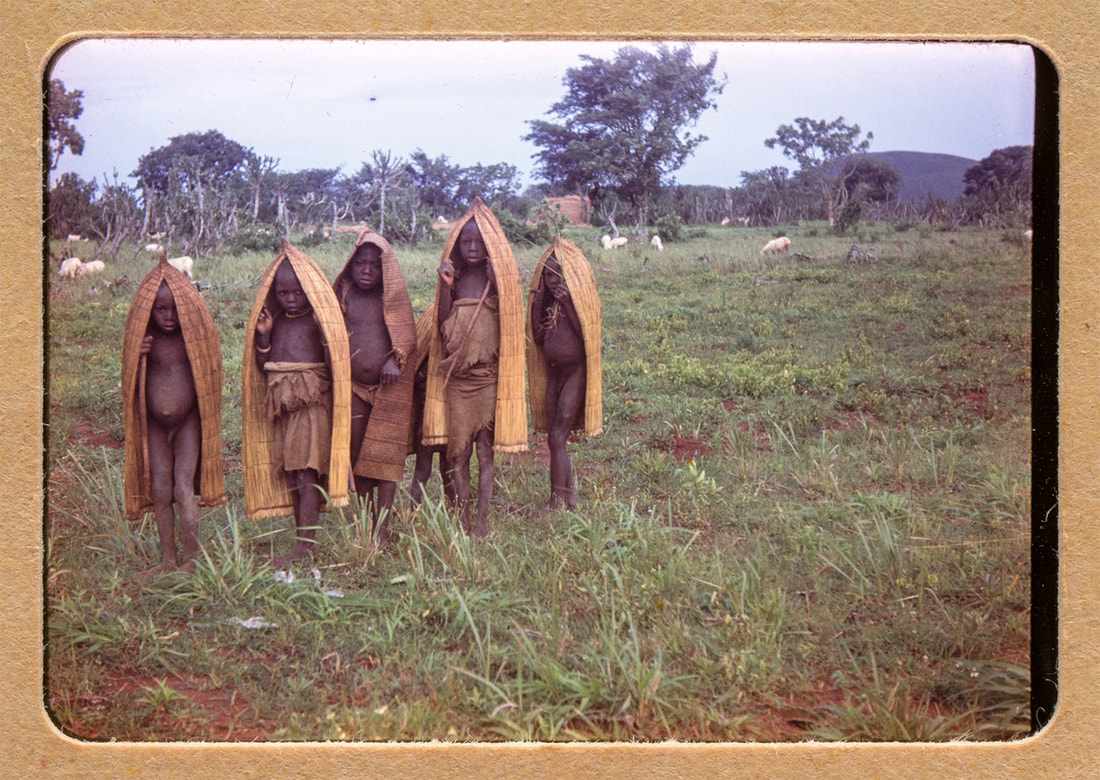
The truth is that Paul Julien also photographed a group of children in northern Nigeria in 1950 on color slide. The information with black and white photographs of the same event informs us that the children are carrying kabidos, a Hausa word that signifies a rain shield.
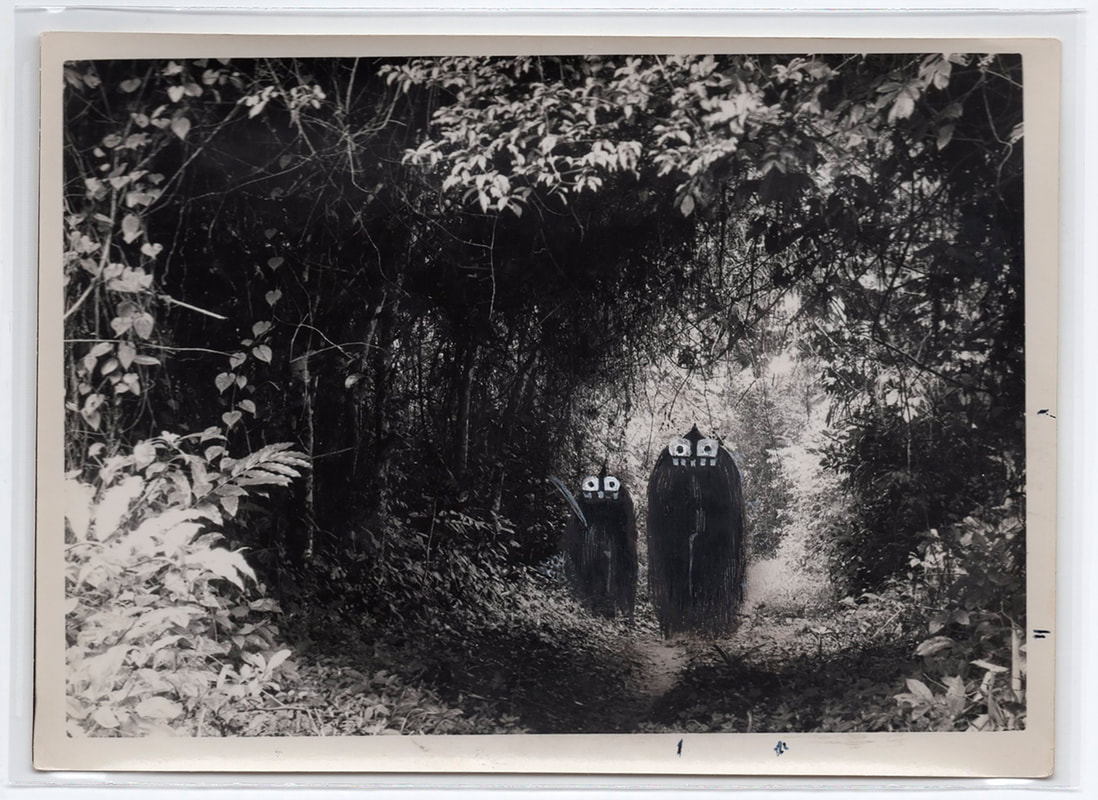
The truth is that most of the vintage prints in the PJU collection are quite straight forward, albeit usually cropped to make the best possible use of the rectangular dimensions of the printing paper. The exception is a print of PJU- 1493 with two figures drawn onto it. There is no information available on who made the drawing or why. It seems, because of the shape and positioning of the figures, rather likely that the addition was made after 1950.